 Infotel, là où vous êtes

Controlled, secure and governed AI
Deploying Artificial Intelligence within an organisation raises very practical questions: which models should be used, where is data hosted, who can access information, and how should new use cases be governed?
At Infotel, these issues are considered from the design stage of platforms, agents and AI projects.
This approach applies to our own solutions, such as Infotelia, the AI Software Factory and IAS, as well as to solutions implemented within our clients’ environments.
Cédric Lefèvre’s perspective
“We want to give teams a clear framework for using AI simply and with confidence. This means validated models, controlled access and shared rules. This approach makes it possible to develop AI use cases while protecting data and keeping people at the heart of how these systems operate.”

AI Act and regulatory compliance
The regulatory framework for AI is becoming clearer, notably with the European AI Act.
Infotel supports its clients in identifying the requirements applicable to their use cases, analysing risks and implementing the necessary control rules.
Business, IT, security, legal and data protection teams are involved in defining responsibilities and deployment conditions.
Data protection and security
AI solutions must meet the same requirements as other components of the information system.
Access management, confidentiality, data protection, traceability and secure exchanges are considered from the design stage.
This approach builds on the security practices implemented by Infotel in critical environments and on its ISO 27001-certified information security management system.

Integrating into existing environments
Each organisation has its own platforms, infrastructure and governance rules.
Infotel does not seek to impose a single architecture. Our teams work with the solutions already selected by the client and adapt the approach to its technical environment, data and constraints.
Depending on requirements, solutions can be deployed in a European environment, a private environment or directly within infrastructure controlled by the client.
Integrating into existing environments
Each organisation has its own platforms, infrastructure and governance rules.
Infotel does not seek to impose a single architecture. Our teams work with the solutions already selected by the client and adapt the approach to its technical environment, data and constraints.
Depending on requirements, solutions can be deployed in a European environment, a private environment or directly within infrastructure controlled by the client.
Applying governance to our own AI use cases
Infotel also applies these principles to Infotelia and to the agents made available to employees.
Before being deployed, new use cases are assessed from several perspectives: business need, data used, security, compliance and conditions of use.
The models available through the platform are selected and validated according to the use cases and the expected level of control.
This experience enables us to share with our clients practices that have already been implemented in a real operational environment.

Applying governance to our own AI use cases
Infotel also applies these principles to Infotelia and to the agents made available to employees.
Before being deployed, new use cases are assessed from several perspectives: business need, data used, security, compliance and conditions of use.
The models available through the platform are selected and validated according to the use cases and the expected level of control.
This experience enables us to share with our clients practices that have already been implemented in a real operational environment.

Human oversight
Assistants and agents can search for information, prepare an analysis, suggest content or carry out certain tasks within a defined framework.Teams remain responsible for validation, decision-making and operational oversight.
Roles and responsibilities must be clear from the design stage, particularly when use cases involve sensitive data or processes that are important to the organisation.
Human oversight
Assistants and agents can search for information, prepare an analysis, suggest content or carry out certain tasks within a defined framework.Teams remain responsible for validation, decision-making and operational oversight.
Roles and responsibilities must be clear from the design stage, particularly when use cases involve sensitive data or processes that are important to the organisation.
Responsible digital practices
AI technologies require computing, storage and energy resources.
Infotel seeks the best balance between the need, the technology used and the value delivered.
This notably means choosing the model best suited to each use case, without systematically relying on the most powerful models, limiting unnecessary processing and, where relevant, using lighter or more specialised models.
Monitoring computing resources, costs and results over time also makes it possible to adjust use cases and avoid excessive resource consumption for limited benefit.
A system’s performance depends not only on the quality of its results, but also on its ability to use resources responsibly.

Responsible digital practices
AI technologies require computing, storage and energy resources.
Infotel seeks the best balance between the need, the technology used and the value delivered.
This notably means choosing the model best suited to each use case, without systematically relying on the most powerful models, limiting unnecessary processing and, where relevant, using lighter or more specialised models.
Monitoring computing resources, costs and results over time also makes it possible to adjust use cases and avoid excessive resource consumption for limited benefit.
A system’s performance depends not only on the quality of its results, but also on its ability to use resources responsibly.

Supporting AI project governance
Infotel can support clients in establishing or evolving their AI governance framework, including:
- use case qualification and risk analysis;
- governance of models, data and agents;
- security, compliance and validation rules;
- team support;
- monitoring of usage, costs and results.
This support adapts to the frameworks already in place and to each organisation’s level of maturity.
Supporting AI project governance
Infotel can support clients in establishing or evolving their AI governance framework, including:
- use case qualification and risk analysis;
- governance of models, data and agents;
- security, compliance and validation rules;
- team support;
- monitoring of usage, costs and results.
This support adapts to the frameworks already in place and to each organisation’s level of maturity.
Developing AI use cases within a clear framework
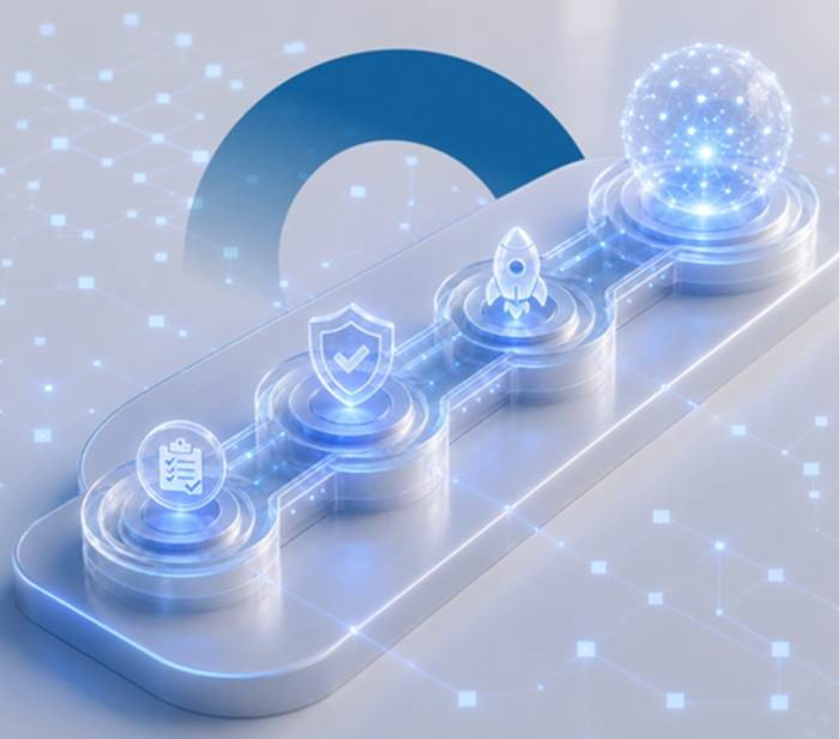
Governance helps define the conditions under which a use case can be tested, validated and then deployed.
By involving the right expertise from the outset, organisations can move forward with greater confidence and progressively integrate AI into their activities.

Developing AI use cases within a clear framework
Governance helps define the conditions under which a use case can be tested, validated and then deployed.
By involving the right expertise from the outset, organisations can move forward with greater confidence and progressively integrate AI into their activities.