 Infotel, là où vous êtes

Developing the skills of tomorrow
Artificial Intelligence tools are now part of the daily work of many employees.
Project managers, developers, Business Analysts, architects and business experts need to learn how to use them, understand their potential and identify the use cases that are genuinely useful in their activities.
The AI Campus supports this evolution.
It brings together training programmes, learning resources and expert communities to help teams develop their skills and progressively integrate these new uses into their work.
Barbara Pélissier’s perspective
“AI is changing tools, but also roles and ways of working. With the AI Campus, we want to give teams clear reference points, methods and opportunities to practise so they can move forward progressively. Training is not only about sharing knowledge: it should also enable people to test, discuss and build confidence in how they use AI.”

Learning in a fast-changing environment
New tools, models and use cases appear regularly.
Training therefore cannot be limited to a few one-off sessions. Teams need to keep learning, testing and sharing feedback over time.
The AI Campus combines training sessions, demonstrations, practical workshops and peer-to-peer discussions.
This approach keeps the content close to real-world needs and allows it to evolve alongside emerging uses.
AI for PM

Supporting project managers
Project managers now have access to tools that can help them prepare meetings, write minutes, analyse documents or track actions.
This programme helps them identify the use cases that are genuinely useful and integrate them into their working methods.
Participants learn how to save time on certain tasks while retaining control over project management and stakeholder relationships.
Augmented Developer
Evolving development practices
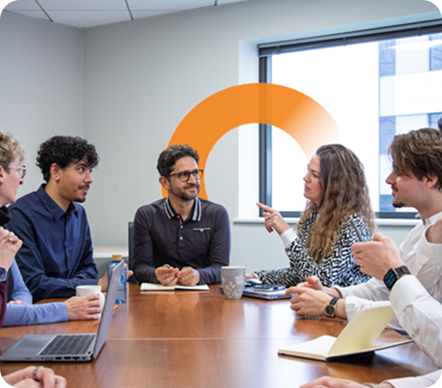
Documentation, test generation, code analysis and application understanding are among the new capabilities available to support development teams in their daily work.
This programme introduces augmented development tools, best practices and ways to integrate them into existing processes.
The objective is to improve software quality, facilitate knowledge sharing and accelerate certain stages of the development lifecycle.
Augmented Business Analyst
Strengthening analysis and understanding of needs
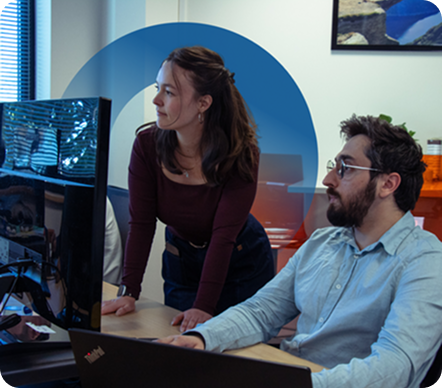
Business Analysts often work with large volumes of information, including documentation, specifications, meeting minutes, procedures and regulations.
AI tools can facilitate information retrieval, document summarisation, requirements definition and deliverable production.
This programme helps Business Analysts integrate these uses into their daily work and strengthen their role as a link between business teams and technical teams.
AI Architect
Designing tomorrow’s AI environments
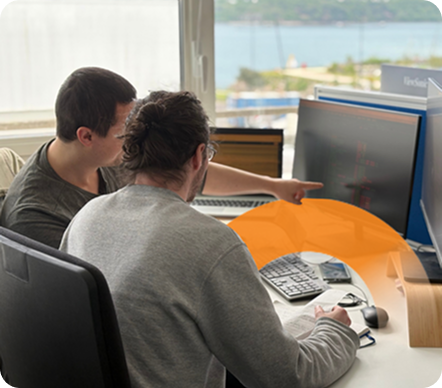
Integrating AI into information systems raises new questions around architecture, security, governance and integration.
This programme covers the main AI architectures, agentic systems, RAG approaches and methods for integrating AI into existing applications.
It helps architects design environments suited to the development and industrialisation of AI use cases.
LMS and expert communities

Continuous learning and experience sharing
The AI Campus is not limited to training sessions.
Participants also have access to regularly updated content, demonstrations, feedback and learning resources.
Expert communities make it possible to share best practices, discuss emerging uses and build on experiments carried out in projects.
Learning also comes from experience and exchanges between professionals.
A practice-based approach
The programmes focus on demonstrations, workshops, practical exercises and use cases inspired by projects carried out by Infotel.
Participants can therefore quickly identify the uses they may be able to apply in their own professional environment.
This approach supports progressive skills development, directly connected to business needs and information system realities.
Programmes that evolve with use cases
AI Campus content is designed to evolve alongside technologies and working practices.
Work carried out in projects, within the AI Software Factory and by the AI Innovation and Industrialisation Centre progressively feeds into the programmes, demonstrations and practical use cases.
Teams can therefore learn from use cases that have already been tested and stay closely connected to developments in the field.

Supporting the evolution of roles
The integration of AI is progressively changing roles, skills and ways of working.
The AI Campus supports employees and managers through this evolution by providing the reference points they need to understand what is changing and find their place in these new ways of working.
The success of AI projects depends as much on team adoption as on the technologies themselves.